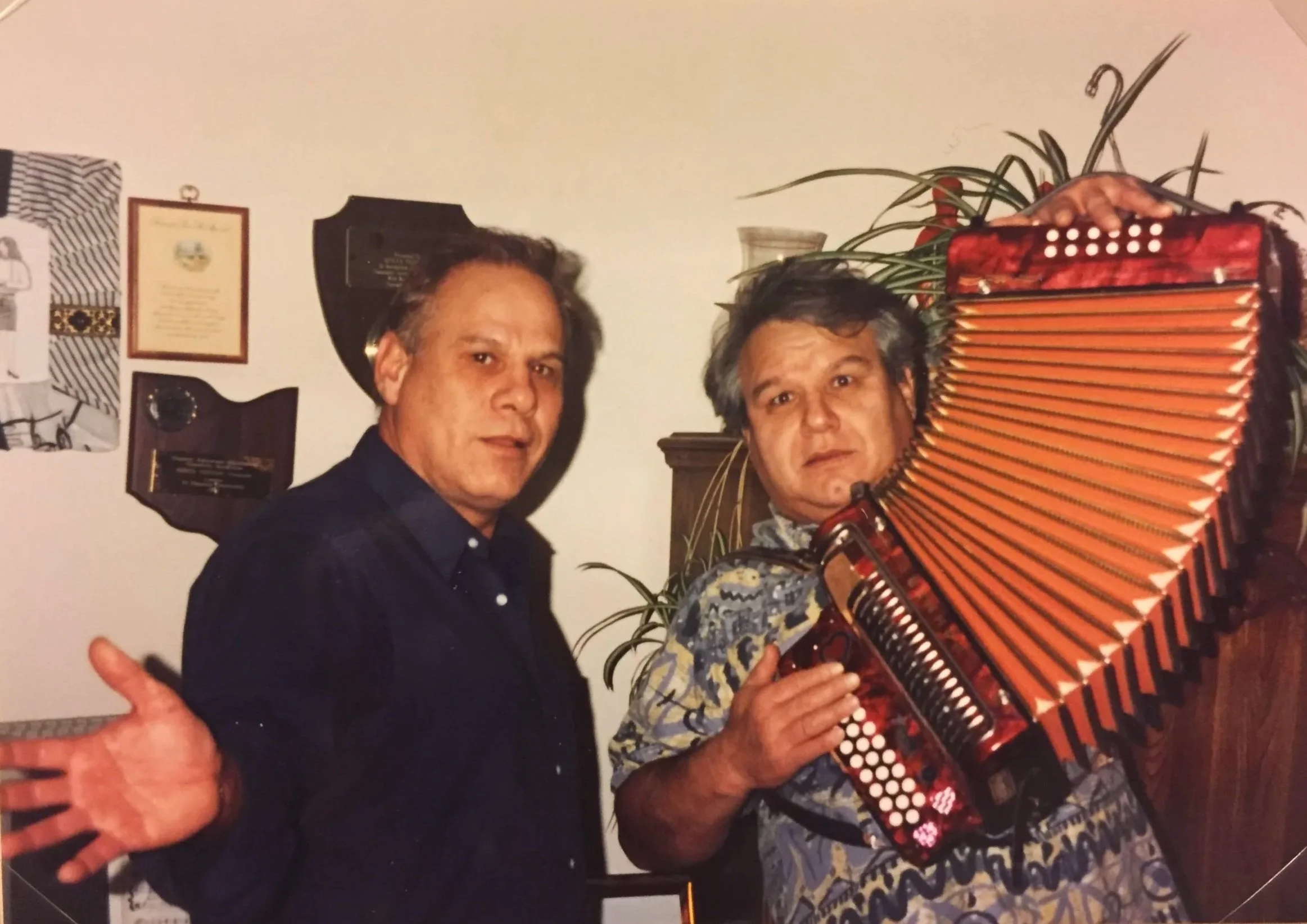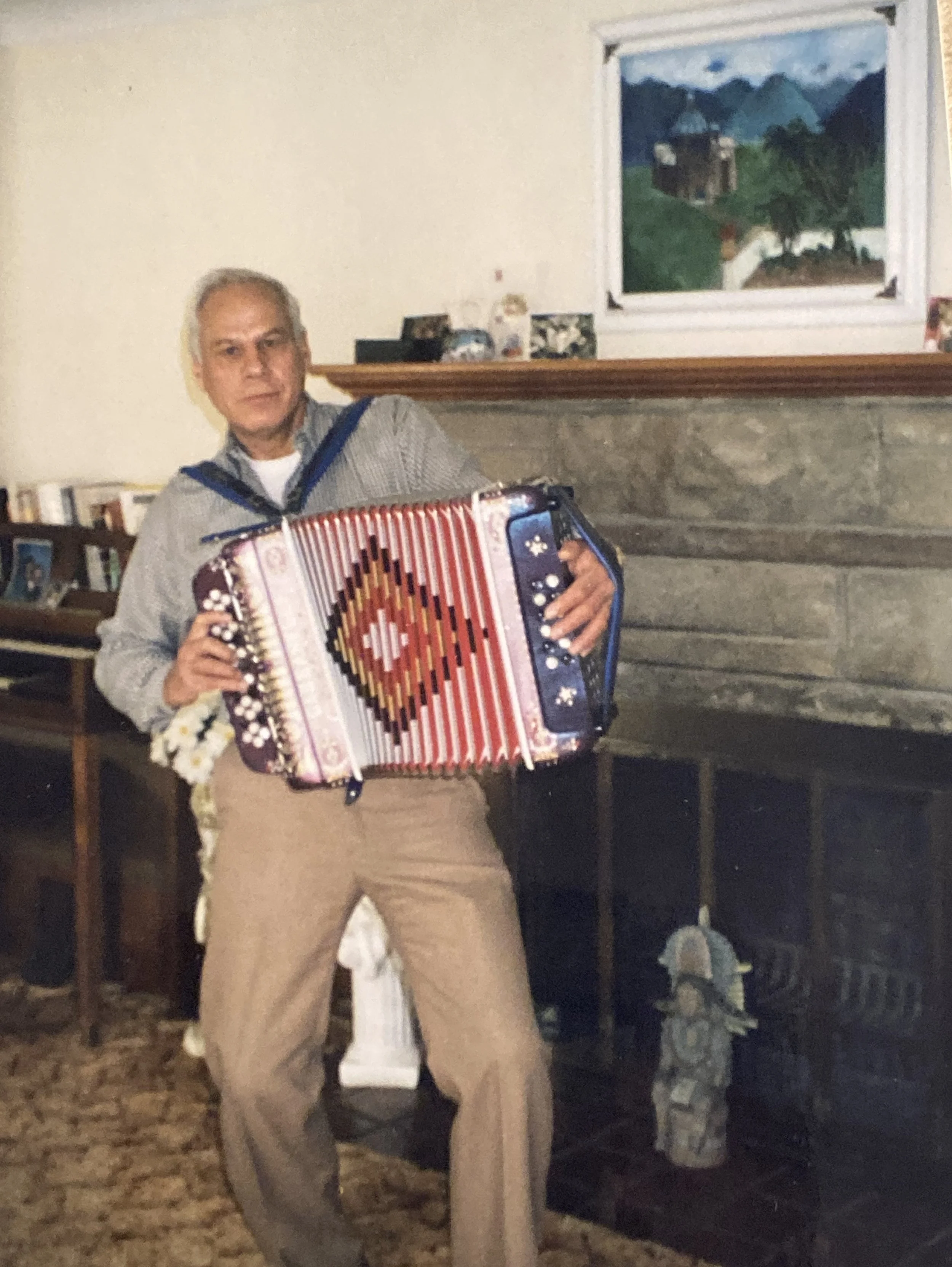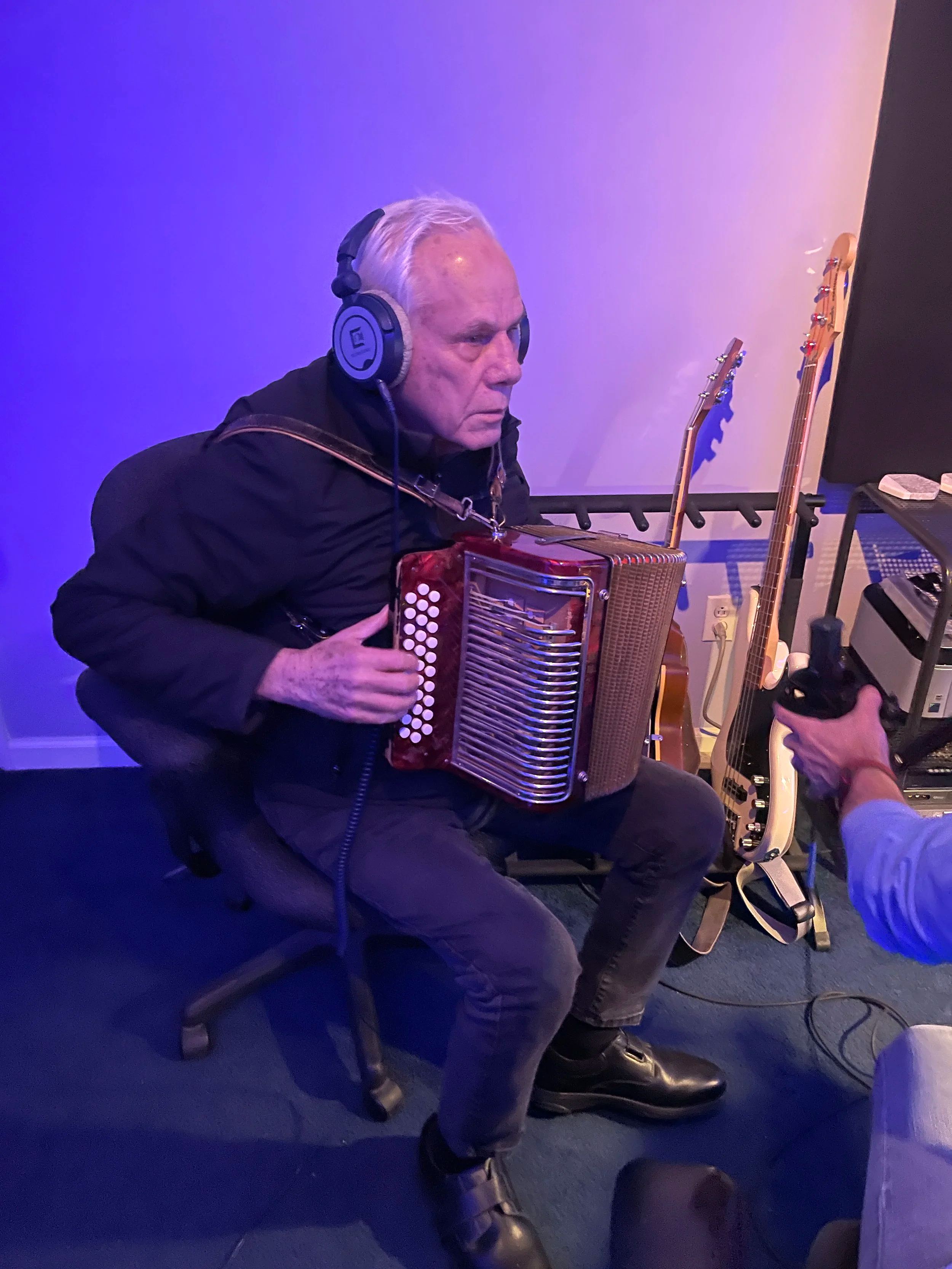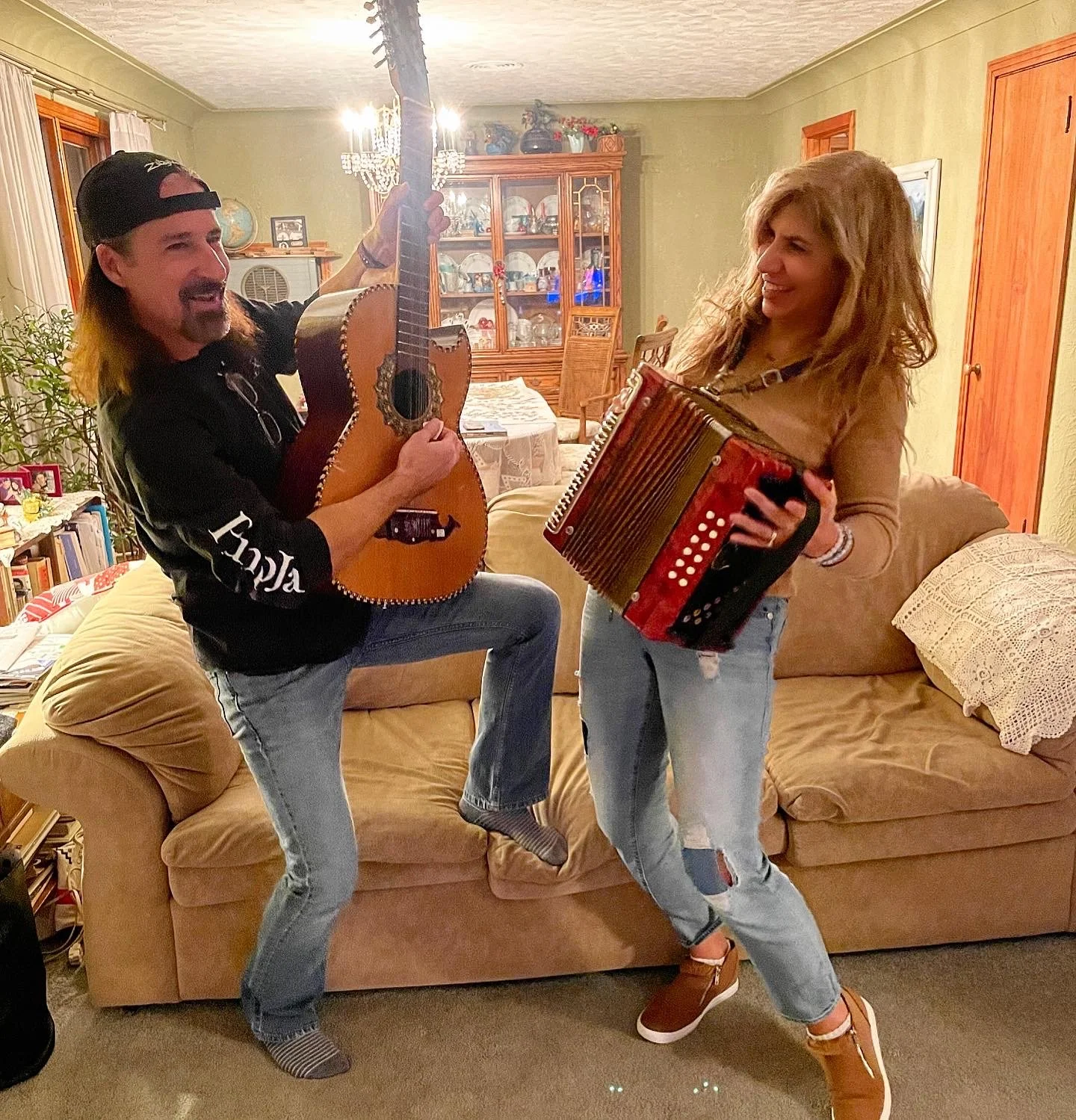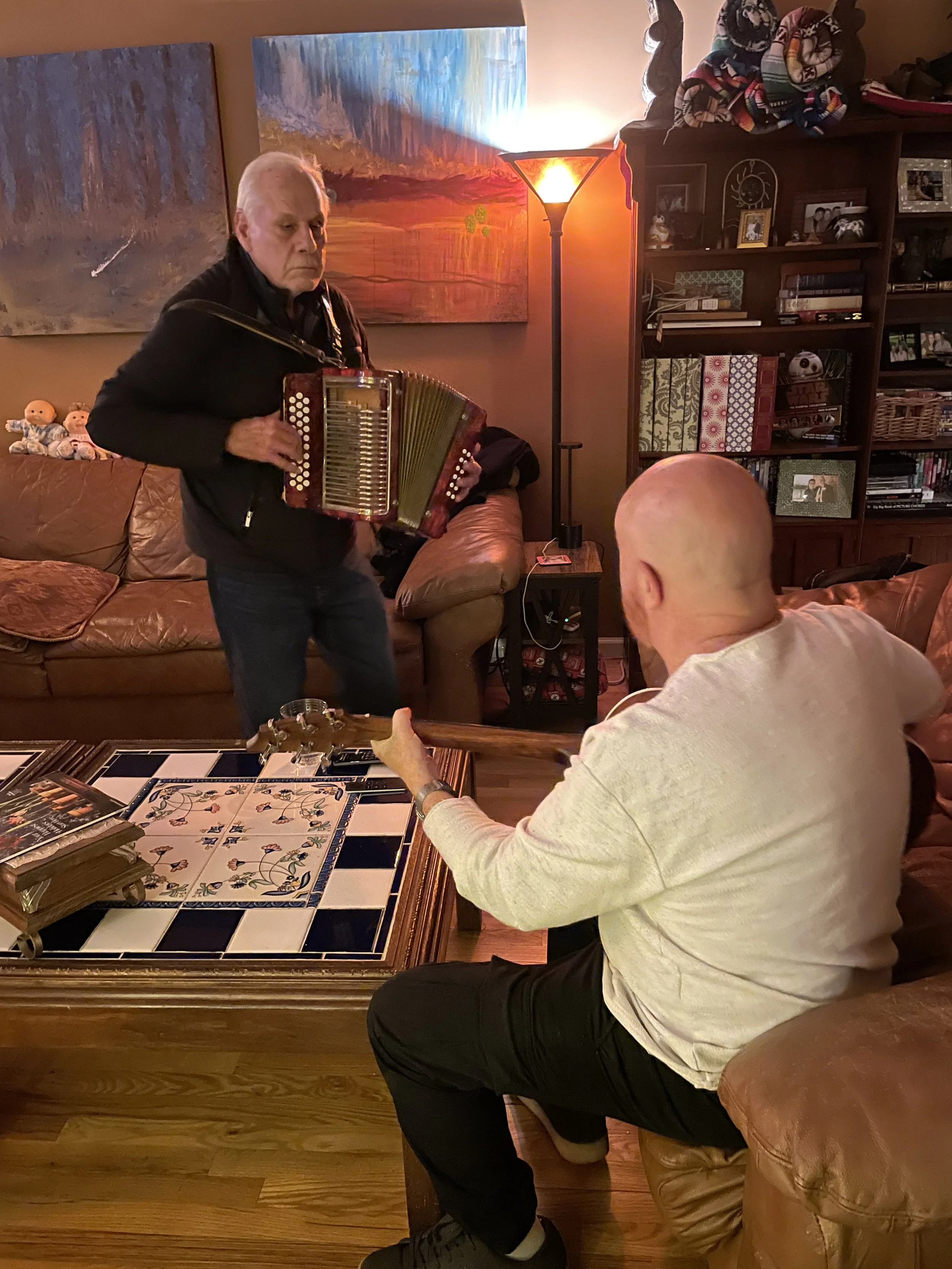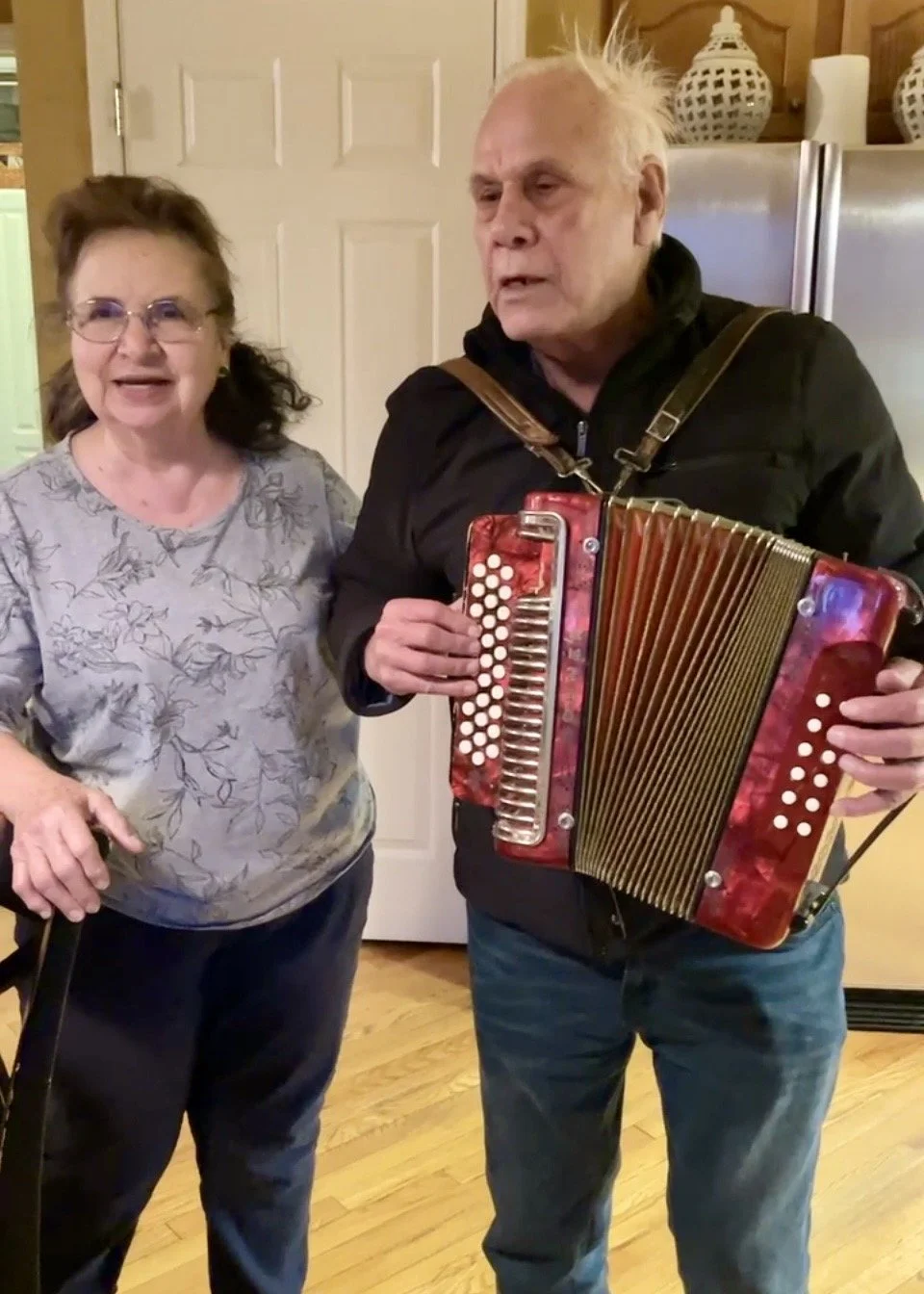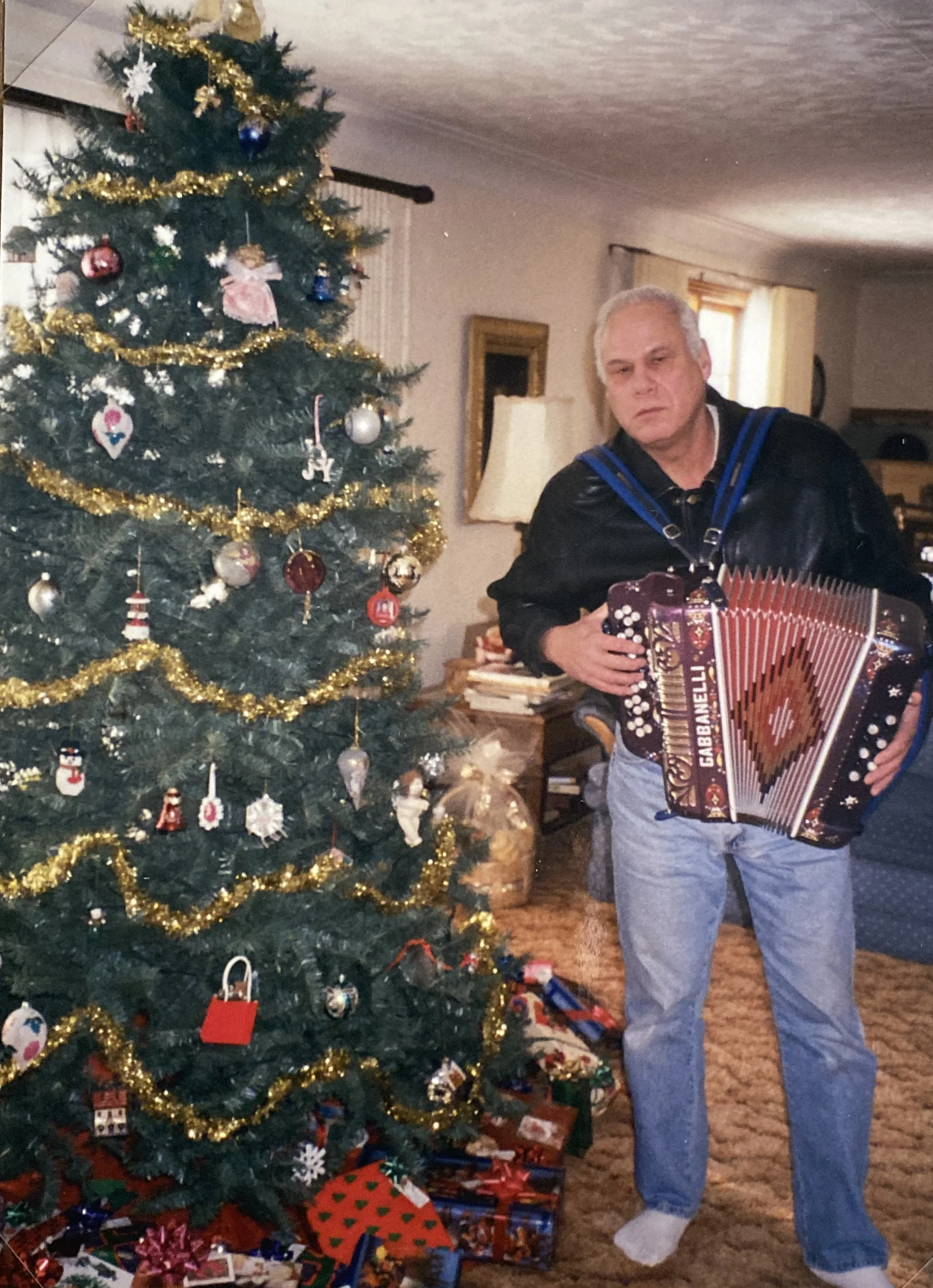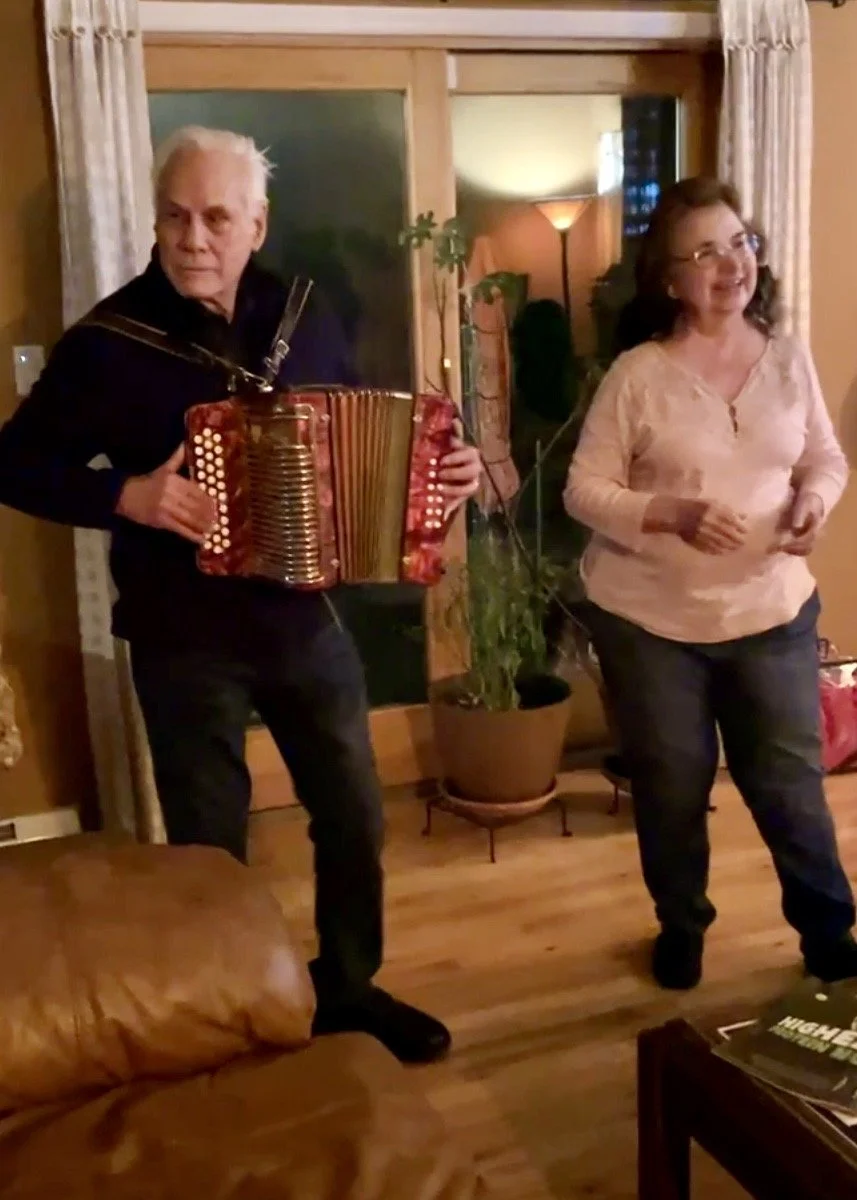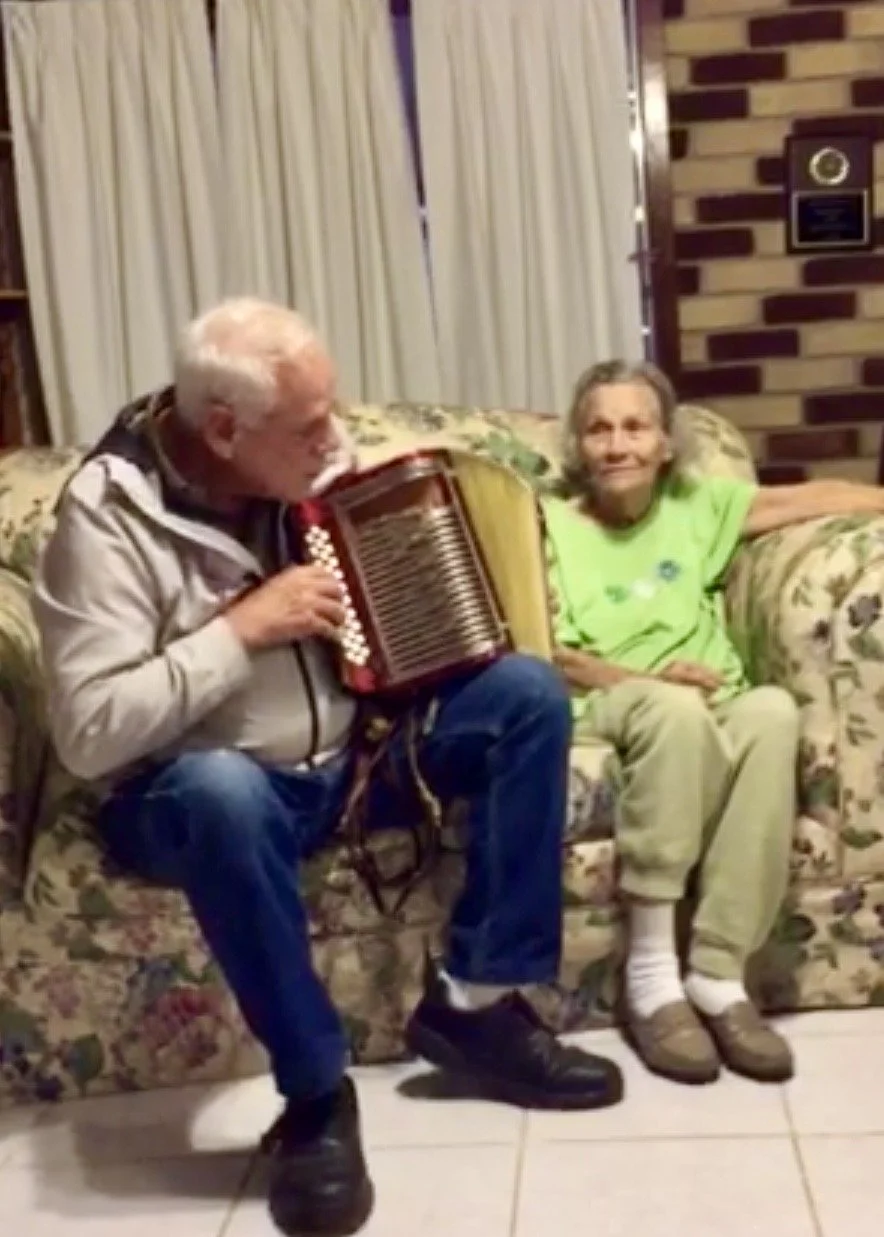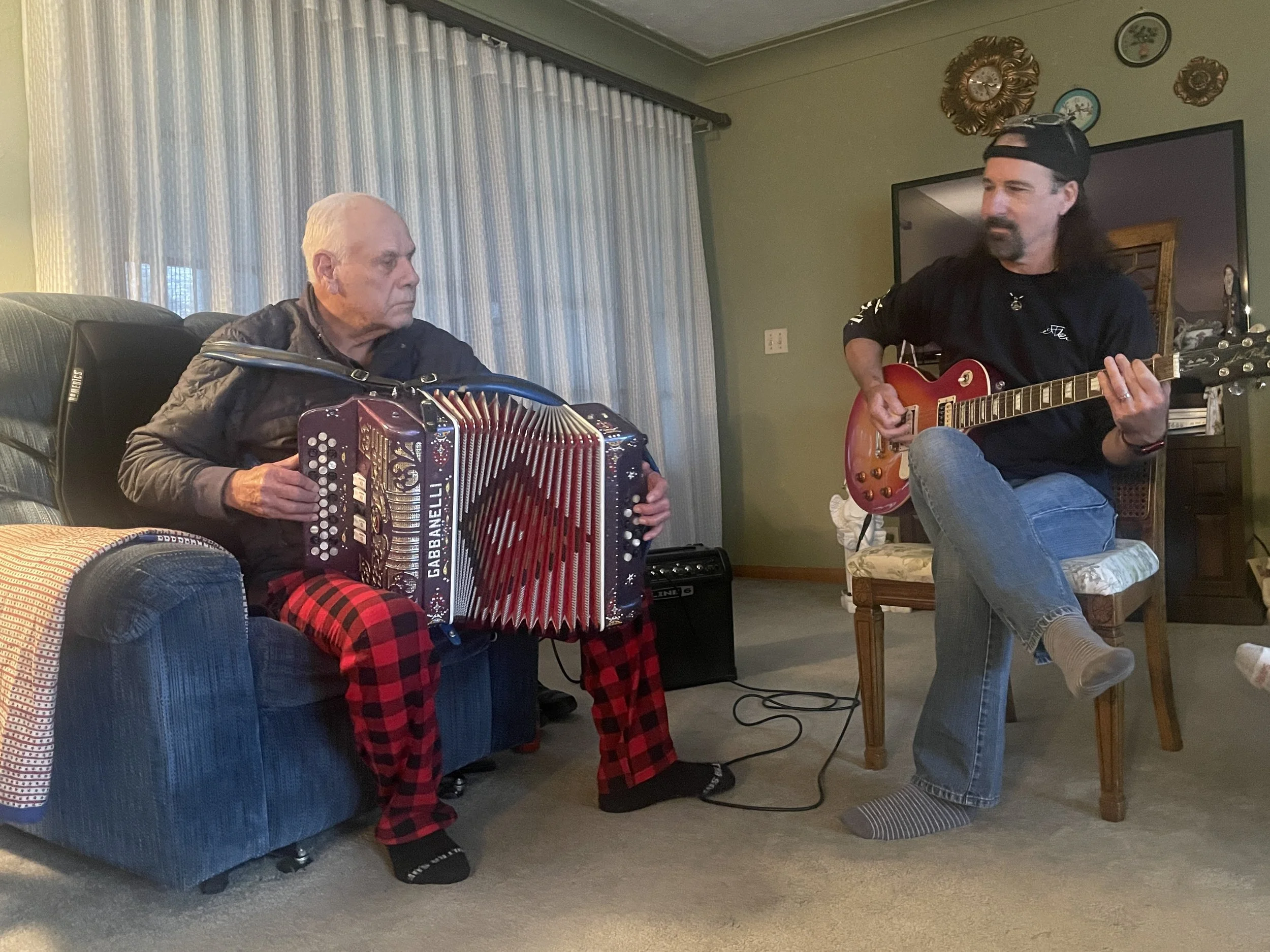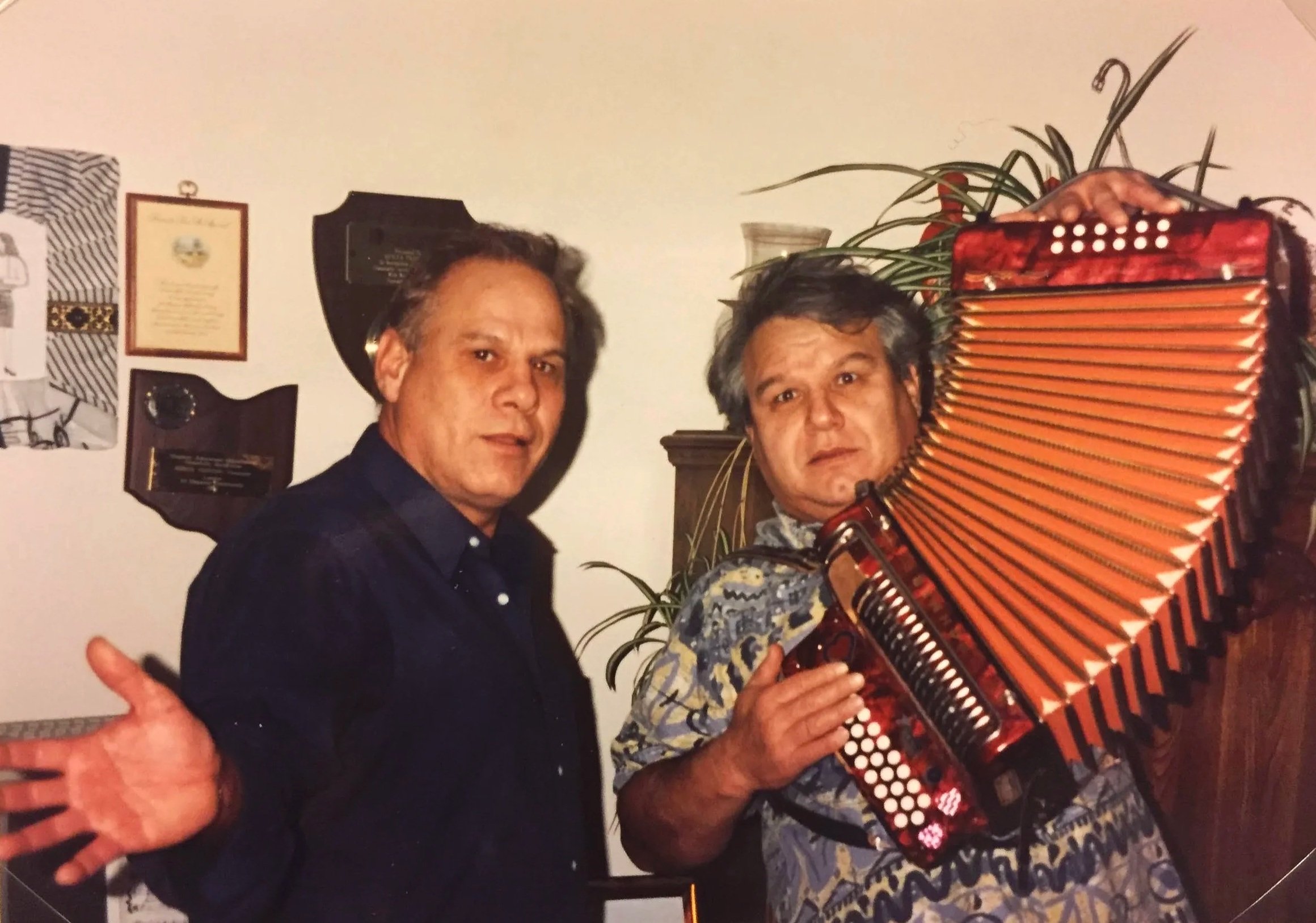
My Dad and his younger brother, Arnoldo (circa - 1990’s)
The Sunday Countdown
Growing up in the 1980s, our Sunday family lunch was a class in pattern recognition. It was a music lesson hidden in plain sight. After church, my family would enjoy gathering for our meal and listening to the radio for Casey Kasem’s Top 100 countdown. My father, Tristan, turned it into a high-stakes game for myself, and my younger brother and sister, Alex and Mindi. Whoever could name the song in the first few notes earned a dime. It’s a skill I carry to this day in fashion and design—the ability to see the vision in the first few strokes of a sketch or the first sentences spoken by a client.
The Theater of the Living Room
Our living room was anchored by a magnificent mid-century console—a showpiece of slatted wood and design that served as our family’s entertainment center. It was fancy and formidable, with front doors of intricately carved wood backed by velvet burgundy panels. When my father slid those doors open, it was like a curtain rising on a Broadway stage, revealing the television hidden behind.
But the real magic was under the top panels. Lifting the lid on the right revealed the glowing dials of the TV, while the left side housed the music: the turntable and the 8-track player. My father loved the ritual of it all. He’d stand there, looking through his curated collection of music and deliberately selecting an 8-track or a vinyl album.
My dad’s own collection of personal favorites included his Tejano favorites but also the moody sound of The Animals, the haunting vocals of The Doors, the harmonies of Three Dog Night and the pop precision of ABBA. We loved listening to music with him. Any time we could get with him we absolutely loved. He typically worked third shift at General Motors when we were young so his schedule would be to sleep when he got home around 7:00 AM, while we were at school and then he’d be awake for a good chunk of the latter afternoon to have dinner with us and then take a short nap before heading back to work around 10:30 PM, but we had him to ourselves on the weekends.
The Pink House in Benavides
That similar musical appreciation was also evident in my mother. She told me a great story about growing up in Benavides, Texas. Her abuela, Nana had a small pink house behind her main residence, that she typically used for boarding guests, but she also allowed my mom and her sister Rita to use it for their very own Elvis Fan Club meetings.
I can just imagine those two young teen girls in the late 1950s, tucked away in a pink house in the South Texas brush country, singing and dreaming alongside the King of Rock and Roll. Music wasn't just something they heard; it was a space they occupied. It was their little community.
The Heartbeat of the Accordion
My father, Tristan, was born in the early 1940s, and by the time he was seven or eight, he had already picked up the accordion. He was a child of "La Frontera" during a time of immense musical evolution. He lived through the era where traditional sounds began to blend with the new electricity of Rock and Roll, and he absorbed it all.
To this day, he plays both the accordion and the guitar, bridging the traditional soul of the Rio Grande with the modern music he has always loved. The fact that listening to, creating, and appreciating music are part of our family’s foundation is never lost on me. I can see that rhythmic pulse within the creative drive of my entire family.
It is why my mother was a fashion entrepreneur and still finds joy in designing new creations today. It is why my sister is a powerhouse vocalist and has a career in the world of music publishing, and why my brother—an architect who loves puzzling technical complexities together—is never without a playlist. It is the reason I spent my career translating vision into fashion and have even dabbled in the guitar and drums myself. I’ve realized that my choice to marry a musician probably wasn't a coincidence; I intuitively found someone who understood that a life is lived in creativity and rhythm is a good one.
Launching 'La Canción de La Frontera'
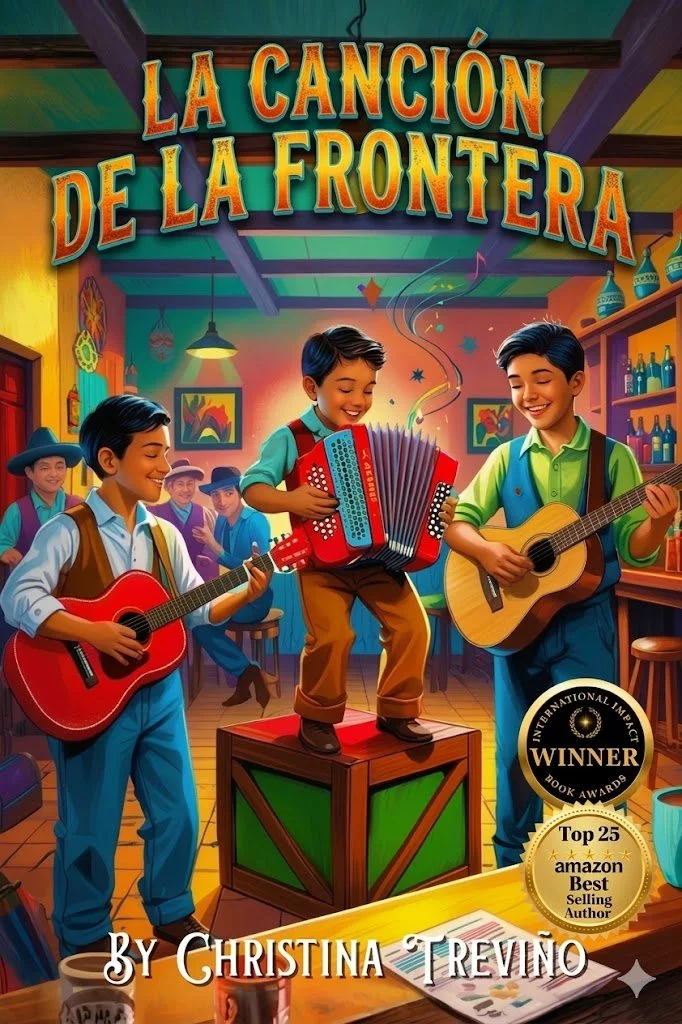
Today, as I launch my fifth children’s book, La Canción de La Frontera, I’m not just telling a story about an instrument. I’m honoring the man who taught us that everything—from a design project to a new book—starts with a single note.
The story is a lighthearted but soulful tribute to the very real "cuentos" my father shared with me about growing up in South Texas. It follows a young Tristan in the late 1940s as he sneakily masters a Hohner accordion he called "El Gigante" amidst the vibrant, dusty streets of La Grulla. Writing this felt exactly like my childhood years, sitting back at that Sunday lunch table listening for those first few notes or waiting for my dad to play that 8-track song, “The House of the Rising Sun”. I’ve taken these family legends and polished them so that a new generation can discover how a little curiousity and a lot of determination can turn a "foreign" instrument into a lifelong legacy.
My father didn't just keep that love of music alive; he taught us that creativity is about expression and making a concept into a true, existing thing you can touch. Whether it's presenting a fashion collection in a showroom, publishing your first book or a young boy in 1940s La Grulla with an accordion, the song only happens when you have the courage to start.
I am beyond thrilled to announce that my fifth children’s book, La Canción de La Frontera, officially makes its debut today!