Día de la Bandera: The Colors of Our Identity
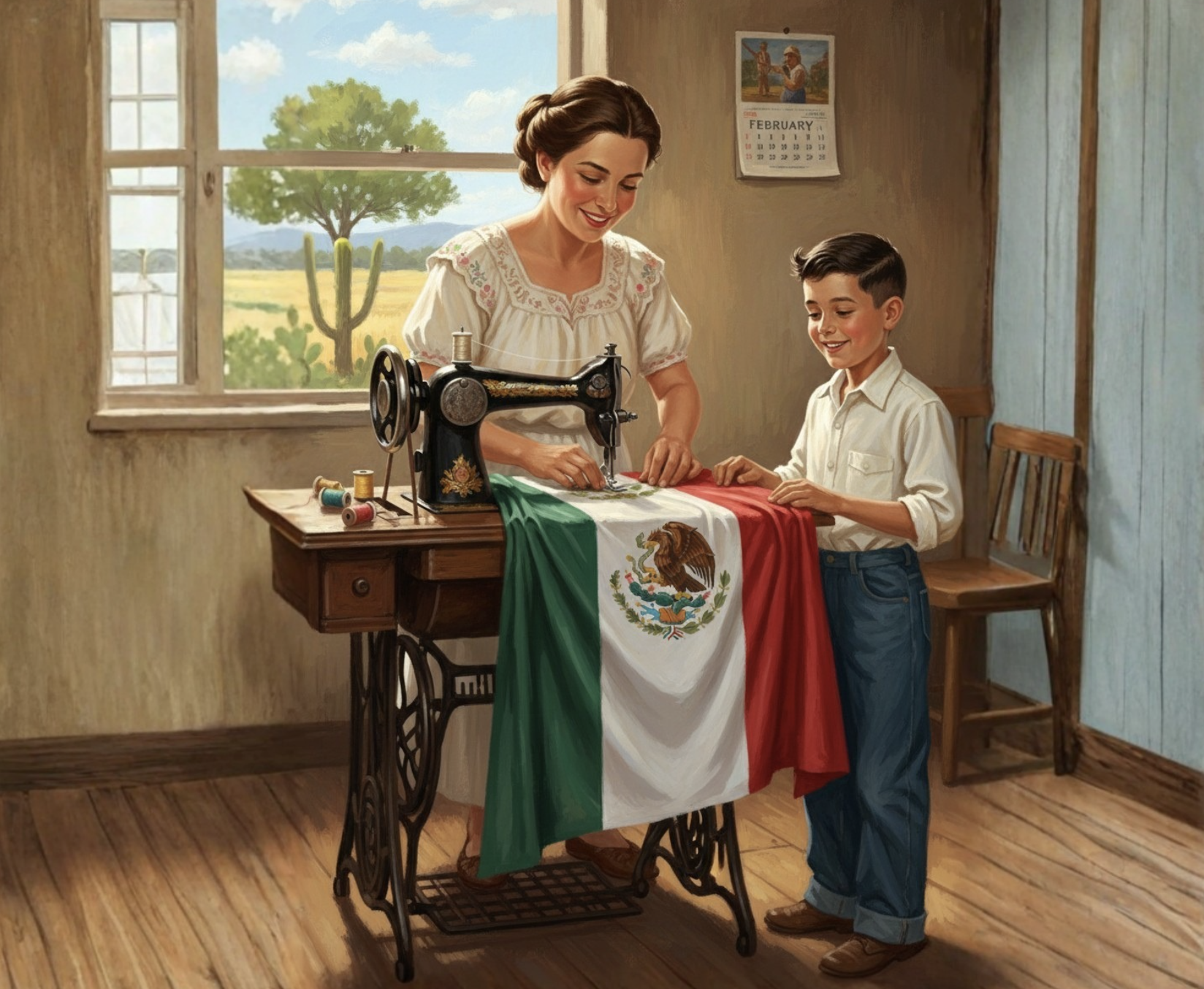
Young Tristan and Tía Hercelia prepare for El Dia de la Bandera
🇲🇽 The Stitches of Destiny
The rhythmic whir-snap, whir-snap of the sewing machine was the heartbeat of Tía Hercilia’s small home. To some, it was just the sound of labor—the necessary noise of a woman making ends meet for the family—but to young Tristan, it was the sound of magic being made.
It was late February in the Texas brushland, and the air carried the sharp, dusty scent of the changing season. Inside, the room was warm, smelling of motor oil and pressed cotton. Hercilia sat hunched over a sea of fabric that had seen better days. The emerald green was faded by the relentless South Texas sun, the white was stained with the dust of the road, and the red had frayed at the edges from the whipping winds of their travels.
“Tía," Tristan asked, reaching out to touch the smooth fabric that felt like water between his fingers, "is this for a dress?"
Tía Hercilia stopped, her foot resting on the heavy iron pedal. She looked at her nephew with eyes that had seen many miles of the migrant circuit—from the asparagus fields to the cherry orchards—and just as many stories.
"No, mijo," she said softly. "This is for tomorrow, the twenty-fourth of February, El Dia de la Bandera. Our flag has been through the hot sun and the tough weather with us, and it has gone into disrepair. But every stitch I add makes it stronger. This flag holds the weight of our entire history".
🦅 The Tale of the Sign
As Tía Hercelia threaded her needle with the gold thread to re-embroider the eagle, she asked Tristan, "Do you know why I must be so careful with this thread, Tristan?", her needle catching the sunlight. Tristan shook his head, his eyes fixed on the shimmering bird taking shape on the white fabric.
"This story belongs to our people," she began, her voice dropping into the low, rhythmic tone of a storyteller. "Long ago, our indigenous ancestors, the Mexica, were searching for a home. They were a wandering people, much like we are when we follow the crops north. They traveled for years from a place called Aztlán, tired and unsure, following a promise from their protector, Huitzilopochtli."
She pulled the white panel closer. "They were told they would know their journey was over when they saw a sign that seemed impossible: an eagle with golden feathers, perched atop a prickly pear cactus that grew straight out of a rock in the middle of a great lake. And in its powerful talons and beak, the eagle would be holding a serpent."
"When the Mexica finally reached the shores of Lake Texcoco, they saw it. The eagle was there, wings spread wide against the sun, conquering the snake right in the middle of the water. It was a sign of balance—of the sky meeting the earth. Even though it was just a swampy island, they didn't hesitate. They built their great city, Tenochtitlan, right there on the water."
She traced the outline of the eagle she had just finished. "The eagle is the strength of our spirit. The serpent represents the earth and the heavy challenges we face. To see them together means the struggle has turned into a victory. It means the building can finally begin."
She looked at him pointedly. "Our family has traveled far, too—through the fields of Texas and Wyoming, and Illinois and to the orchards of Michigan. But like the Mexica, we carry our strength with us until we find our place to land. That is what this bandera, means. It is the promise that no matter how long the camino, we will find our way home.
“The green panel of the flag is for our hope," she whispered. "The white is for our unity. And the red... well, the red is the heart. It’s the blood of those who came before us and dreamed of a place where an eagle would finally land on a cactus."
Tristan watched as she carefully knotted a gold thread, finishing the eagle’s wing. He realized then that his Tia didn’t always sew to earn extra money. Sometimes her sewing was about repairing the pride of a people, one stitch at a time.
"When you grow up, Tristan," she said, finally snipping the thread with a sharp clack of her shears, "remember that you carry these colors inside you. No matter where the road—your camino—takes you, you are the eagle.
She handed him a small, triangular scrap of the green fabric. He tucked it deep into the pocket of his worn-out blue jeans, feeling the warmth of the fabric against his palm. He knew then that as long as Tía Hercilia had her needle, their family’s story would never come unraveled.
🪡 Continuing the Conversation
The story of Tia Hercilia reminds us that heritage is something we create and maintain with every small action. Here are some questions to spark a conversation with your own family, students, or book group:
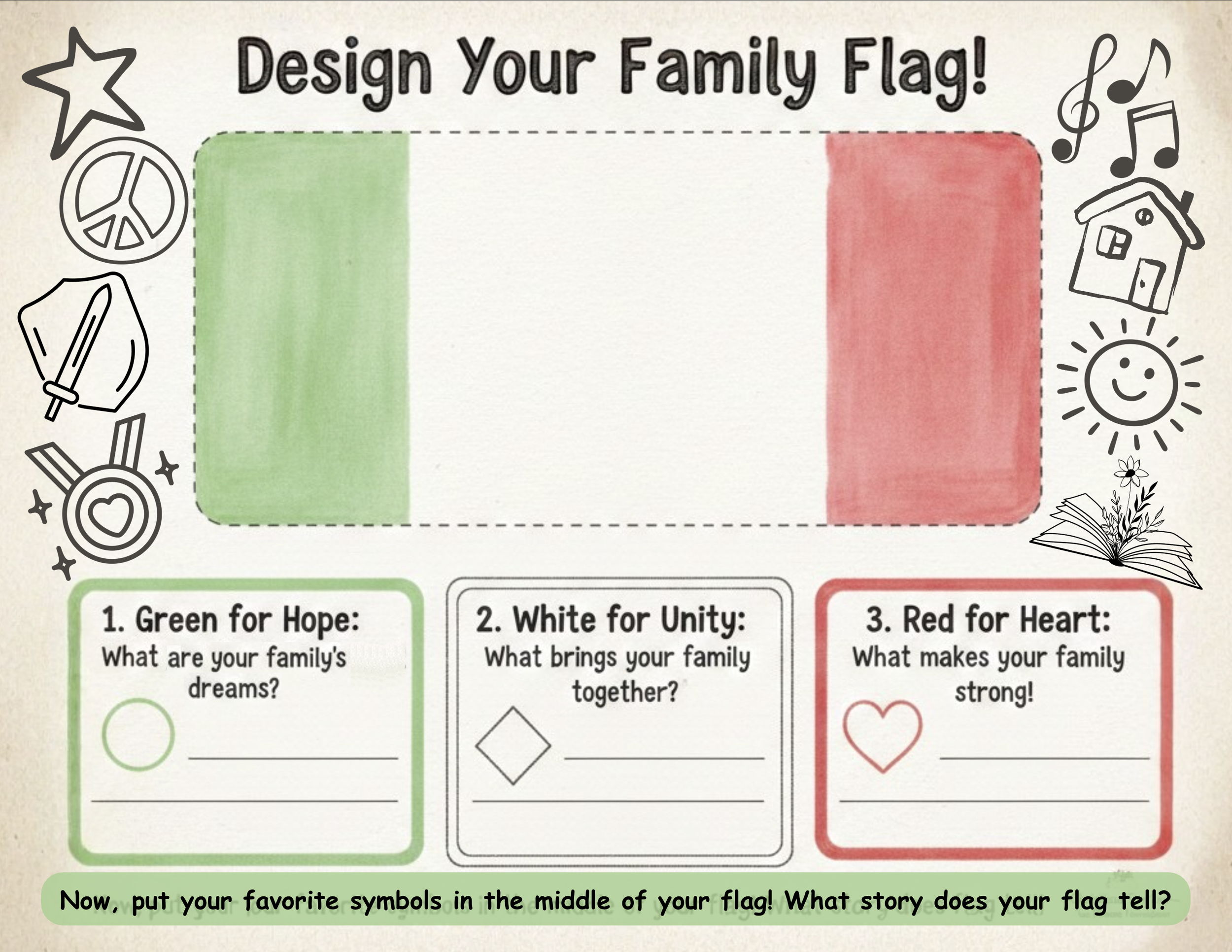
The Power of Symbols: In the story, the green silk represents hope. If you were to design a flag for your family today, what three colors would you choose, and what meaning would you give them?
Invisible Labor: Tristan realizes that Tia Hercilia’s sewing is "magic," even though it was also hard work to make ends meet. Who in your family performs "quiet magic"—the everyday tasks that keep your history and home held together?
A Portable Treasure: Tristan tucks a scrap of green silk into his pocket as a reminder of his identity. Do you have a small object—a "portable treasure"—that reminds you of where you come from or who you are meant to be?
Pride and Contribution: The women in our stories often found moments of peace in their chores. How does contributing to a family goal change the way you feel about your own sense of self-worth?
📌 The resilience Tía Hercilia sews into the flag is the same spirit that guides our family through every chapter of their lives. If you want to dive deeper into the journey that shaped Tristan and his family, you can follow along their migrant path in my book, El Camino del Destino. It is there that the themes of heritage, destiny, and the search for home truly come to life.